RiskIndex. Redesign for an AI risk-evaluation platform


RiskIndex case study in brief
RiskIndex is a B2B SaaS platform that financial and procurement teams use to evaluate business counterparty risk. It gives insights on a company's debts, financial data and registers. In 2025, over about four months, Other Land redesigned the existing platform. Few people bought it, because they had to pay before they could try it.
The work started with a full UX audit and new branding and UI. The main proposal was a freemium model, so users see the value before they pay. The scope also covered the data visualisations, a design system, a mobile version and a first website.
With the free plan, conversion to purchase rose by about 40%, measured in PostHog, and more users booked a demo with sales.
Key takeaways
- RiskIndex users had to pay before they could try the product, so few bought it. Other Land proposed a freemium model.
- Conversion to purchase rose by about 40%, measured in PostHog. Users now see key company data for free, so more of them book a demo.
- Other Land explored about 20 visual directions for the central element, the risk index itself.
- About 37% of users were on mobile, so Other Land designed a full mobile version.
Project facts
- Client
- RiskIndex
- Industry
- B2B SaaS, AI Products, Fintech
- Year
- 2025
- Duration
- About 4 months
- Services
- Product Design, Product UX Audit, Website Design
- Platform
- Web platform, desktop and mobile (about 37% of users on mobile)
- Engagement
- Embedded Designer
- Other Land team
- Product designer, design director, fractional product manager
- Client team
- CEO, COO
- Collaboration
- UX audit and concept choice together with RiskIndex's team
- Client stage
- Bootstrapped, 230+ B2B users
- Key result
- Conversion to purchase up by about 40%, measured in PostHog, with more demo requests from the free plan
- RiskIndex
The challenge RiskIndex faced
Few people bought RiskIndex, because users had to pay before they could try the product. The platform already existed, but it did not show its value before the purchase.
RiskIndex is a B2B SaaS platform that financial and procurement teams use to evaluate business counterparty risk. Its branding and UI were outdated, and the product had conversion problems no one had mapped yet.
- Users had to pay before they could try the product
- Low conversion to purchase
- Outdated branding and UI
- An unclear value proposition
What Other Land did for RiskIndex
Other Land proposed a freemium model, so users try RiskIndex and see basic company data without buying it first, and built it into the product. More users booked a demo, and more demos turned into purchases.
The work started with a full UX audit and new branding and UI. Then came a clearer value proposition and the data visualisations. A design system followed, and with it a mobile version and a first website.
- A freemium model to try the product before buying
- A full UX audit that mapped the conversion problems
- New branding and UI with a clearer value proposition
- A design system, a mobile version and a first website
How Other Land worked with RiskIndex's team
Other Land worked as a product partner to RiskIndex's CEO and COO, not only as a design team. Every design decision served one business goal. More users had to move from a free look at the product to a demo, and from there to a paid subscription.
The work followed the conversion funnel. The UX audit showed where users dropped off before purchase, and each finding became a hypothesis for the redesign. The freemium model was the biggest of them. The CEO and the COO made the business calls, and Other Land turned them into the product.
- Business decisions made together with the CEO and the COO
- Conversion to a demo and to purchase as the metrics behind every decision
- Audit findings turned into hypotheses for the redesign
- A product designer, a design director and a fractional product manager
UX audit of the RiskIndex platform
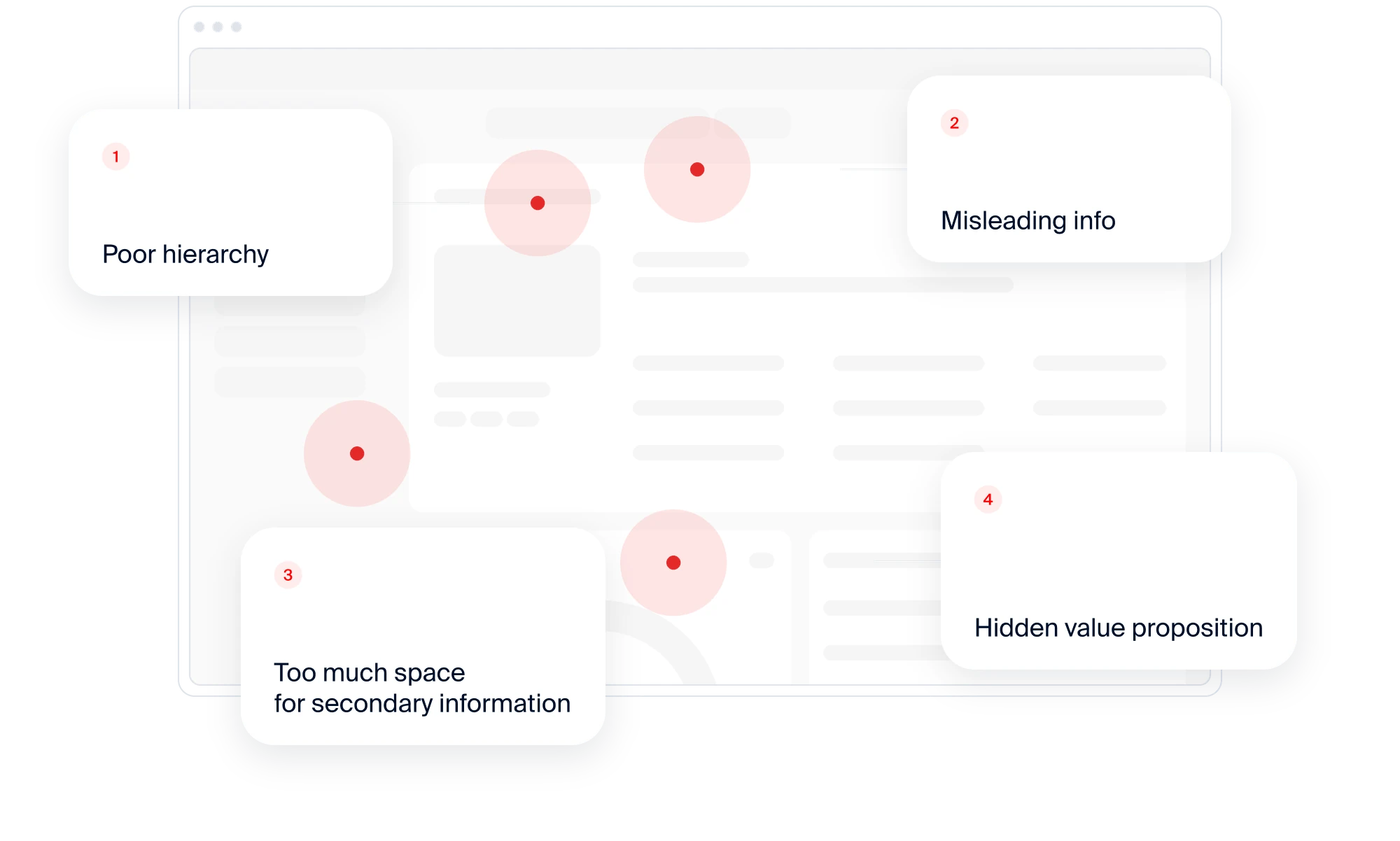
The UX audit mapped why RiskIndex lost users before the purchase. The value was hidden behind the paywall, and users had to pay before they saw a single report.
Other Land ran the audit together with RiskIndex's team. It also found a weak information hierarchy, misleading information and too much space for secondary data. Each problem was tied to a drop in conversion and set the priorities for the redesign.
Visual concept chosen together with RiskIndex
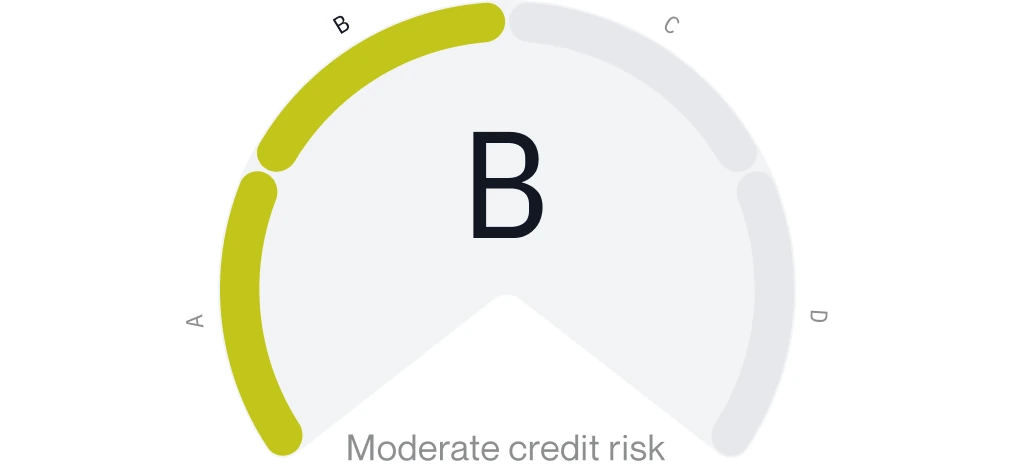
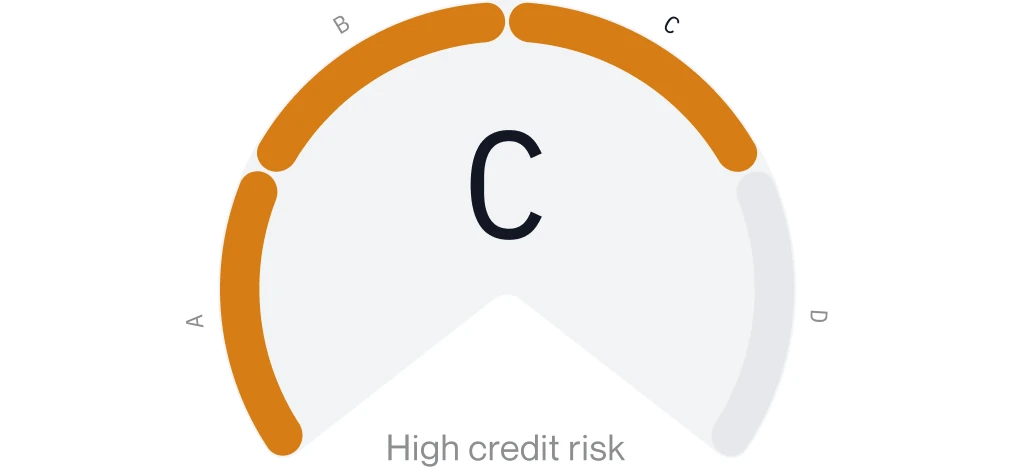
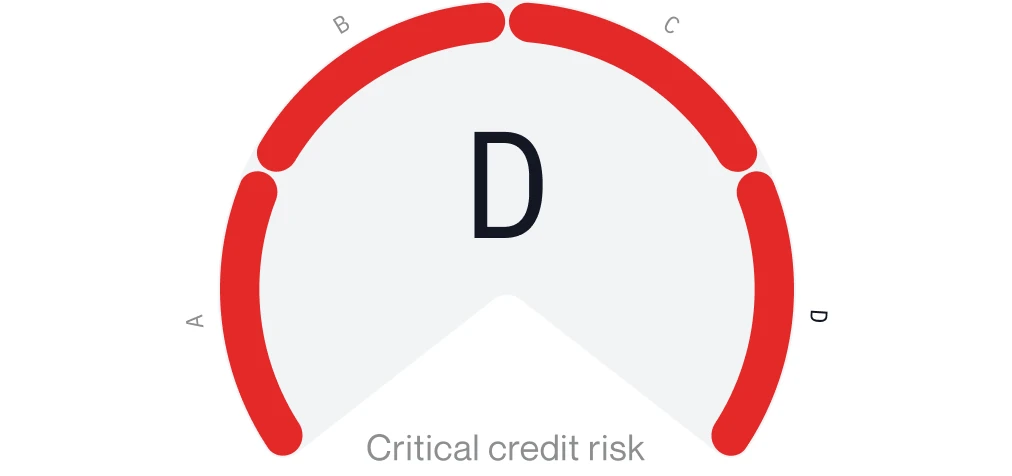
Other Land explored about 20 visual directions for the central element of the product, the risk index itself. The final concept was chosen together with RiskIndex's team, balancing simplicity and functionality.
Many places needed data visualisation that is clear and still unusual. RiskIndex builds its insights with AI modules, and the visuals had to make those results easy to read.
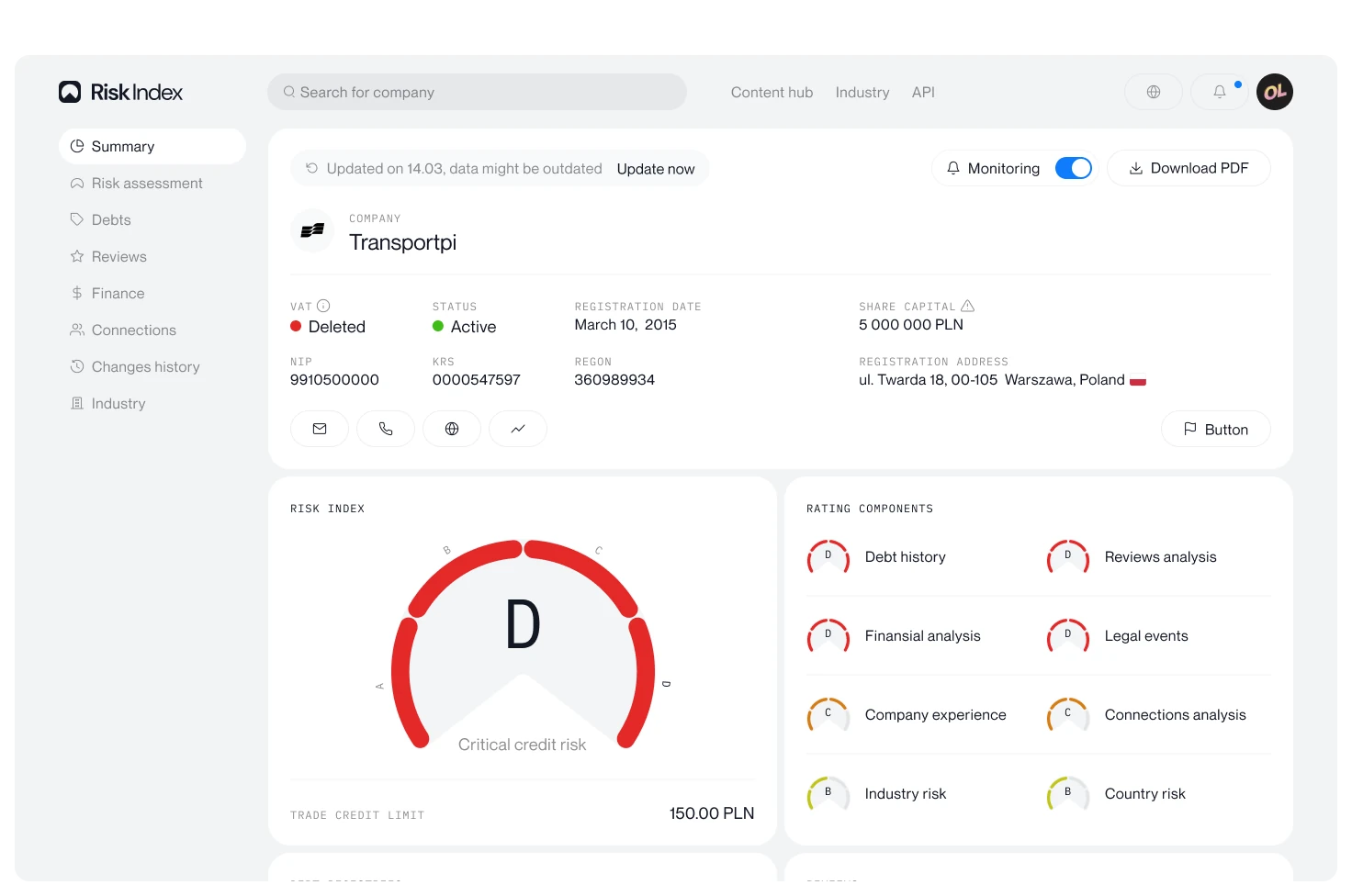
Risk report page with a gauge chart
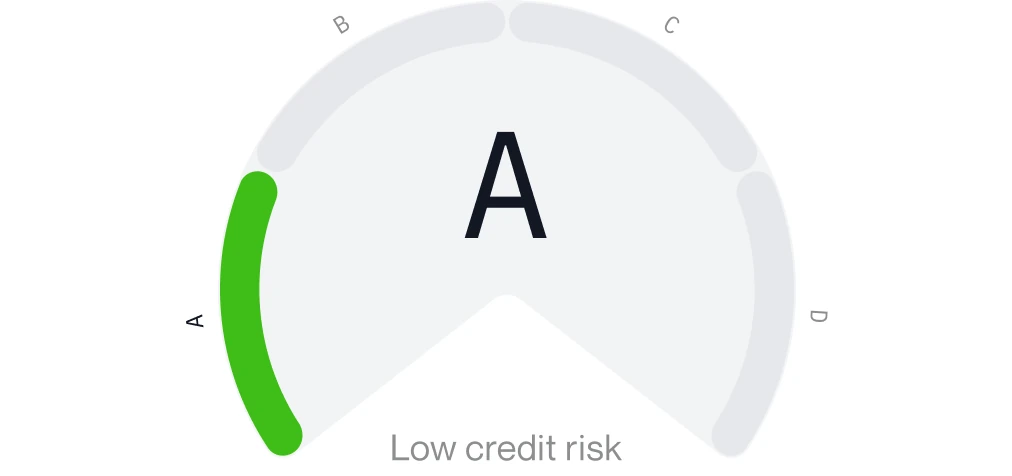
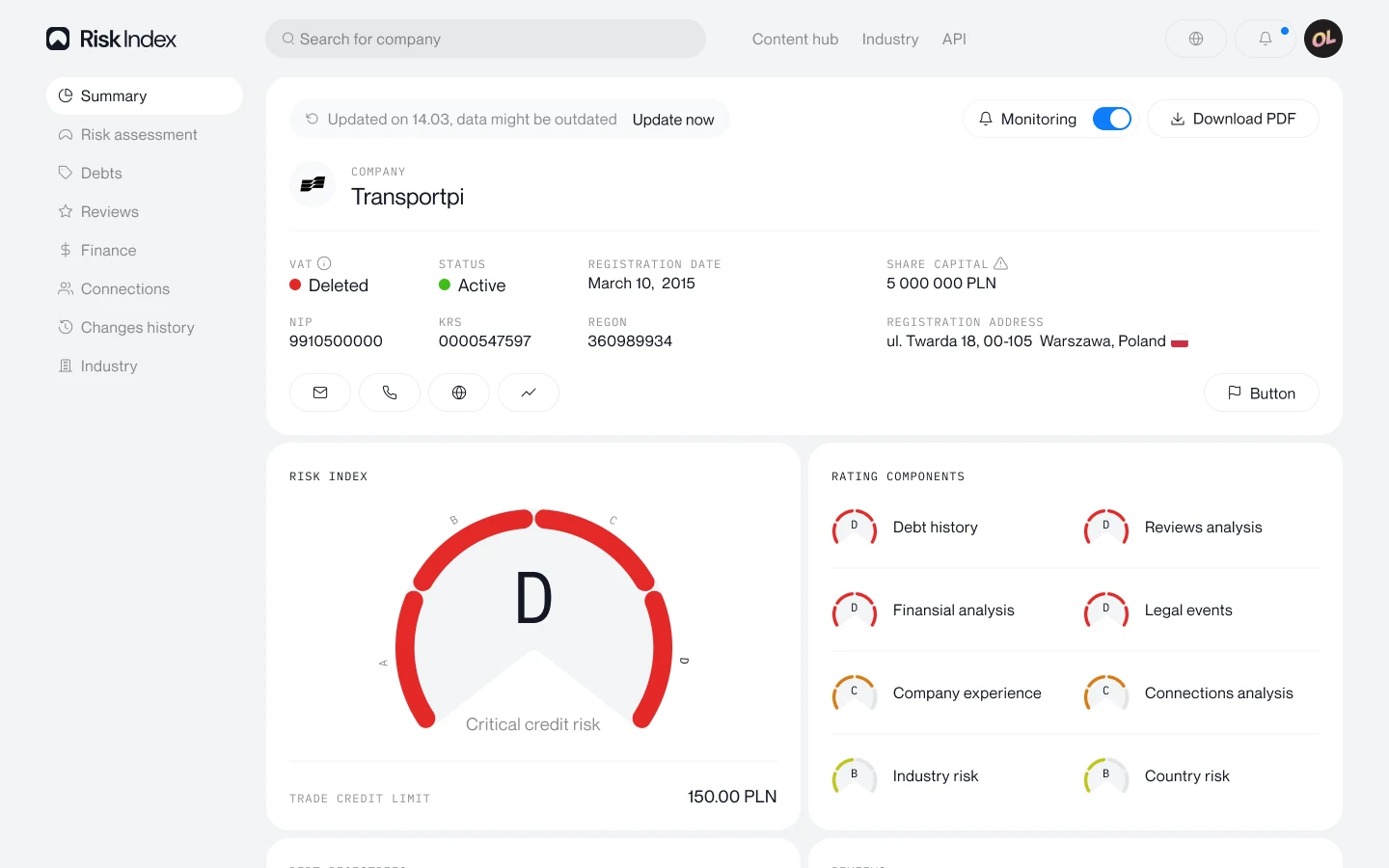
The risk report shows a company's risk grade at a glance in one gauge chart. The gauge is divided into four risk grades, Critical, High, Moderate and Low, each with its own colour. Other Land used the same chart for every risk subcategory.
The report navigation follows a table of contents pattern. Users scroll through the sections quickly, and the full report stays within reach.
Freemium preview of the risk report
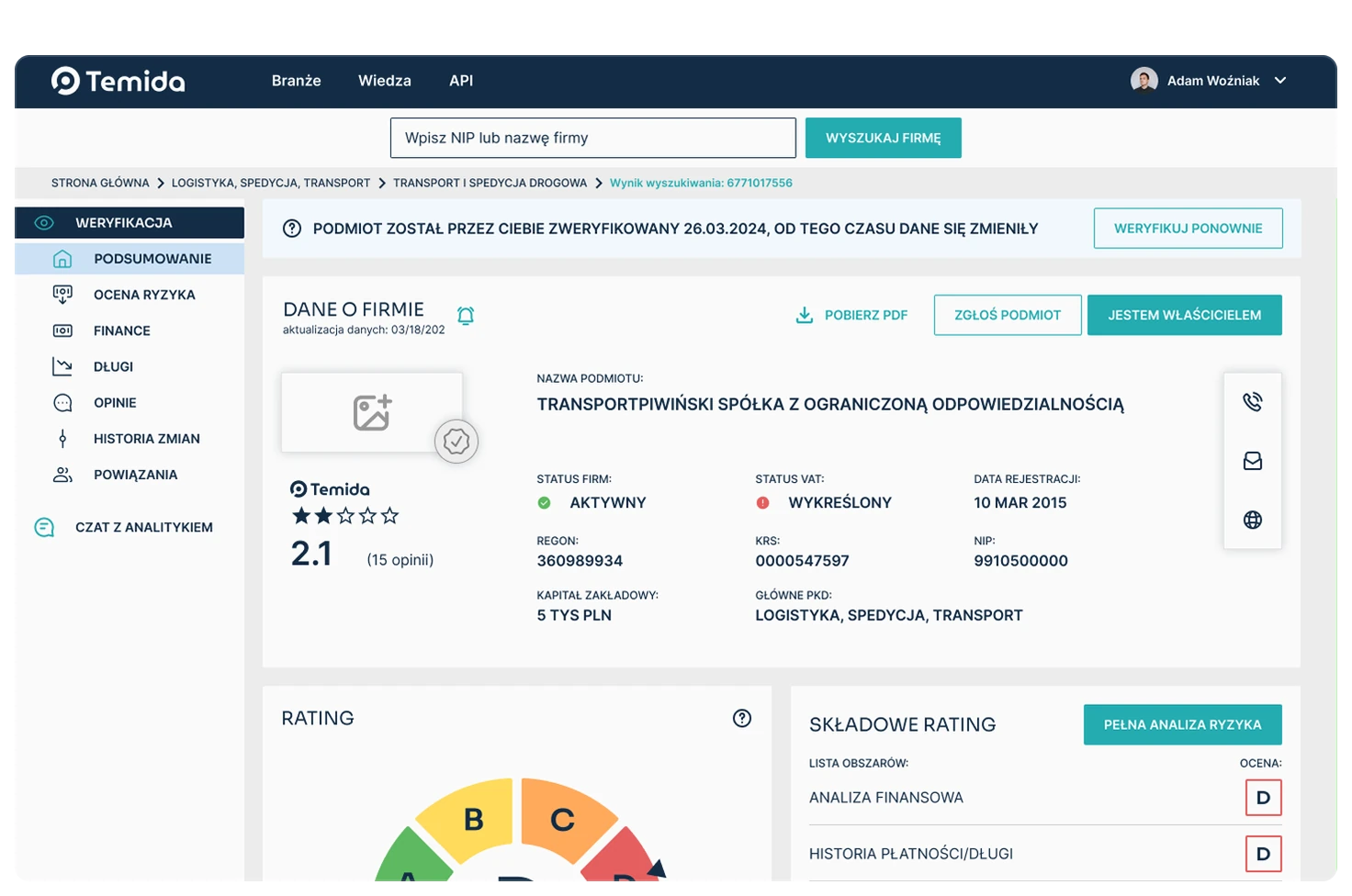
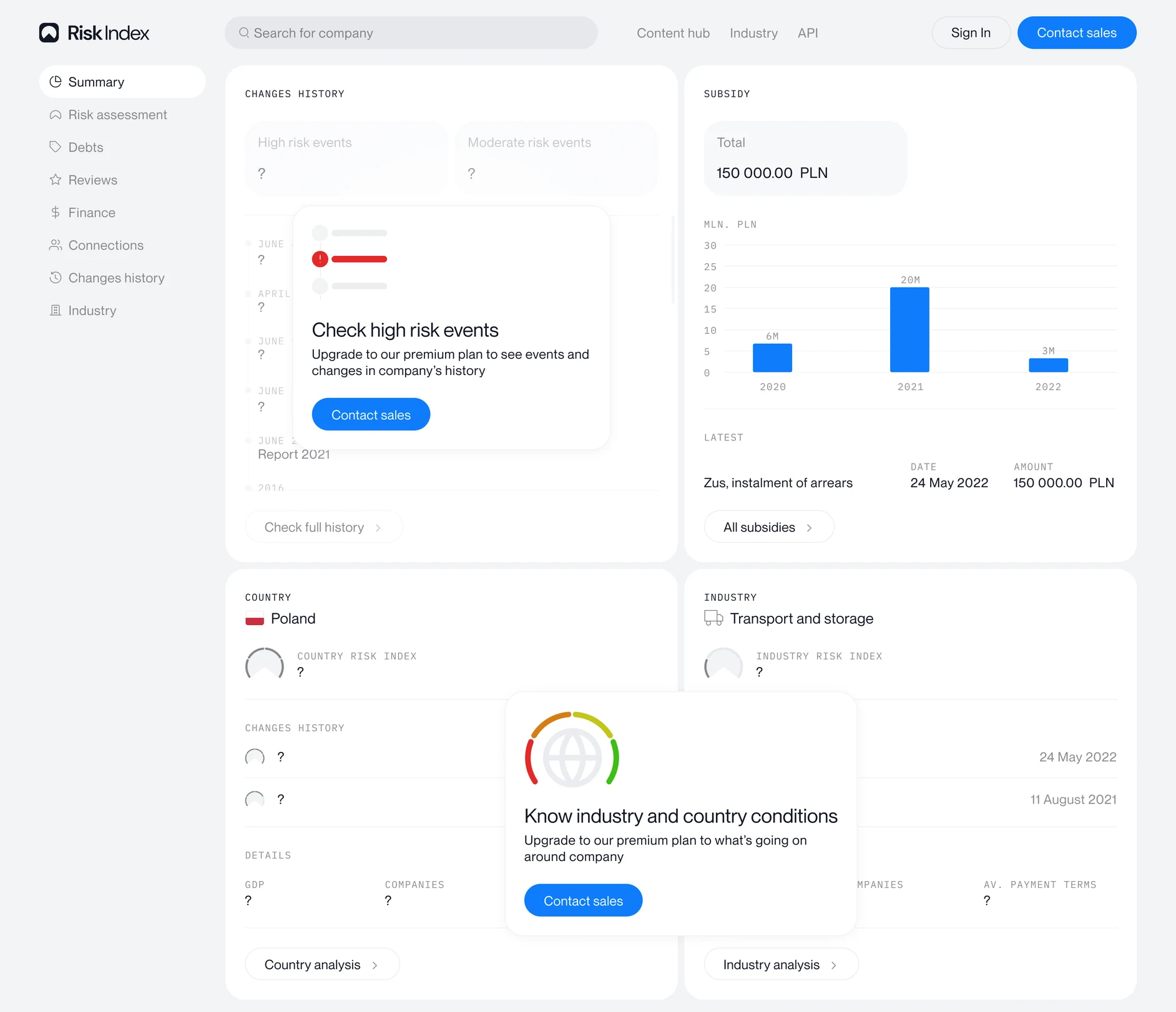
Users now try RiskIndex before they buy it. Other Land proposed a freemium model that shows key company data for free, and integrated it into the product.
Users see the value of the report first, and the calls to action in the free plan lead them to a demo with sales. Conversion to a demo grew, and with it conversion to purchase.
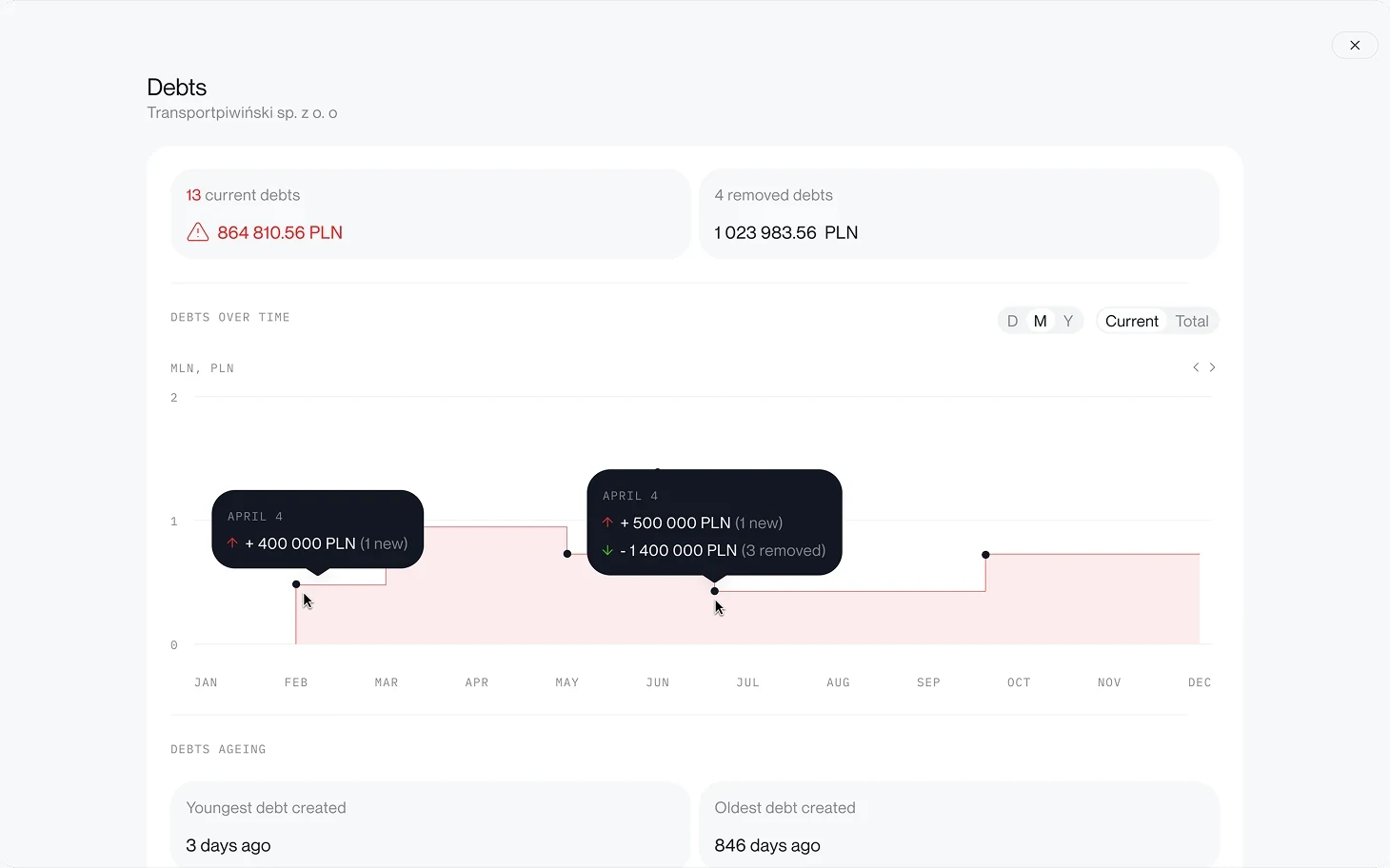
Debts and financial indicators in RiskIndex
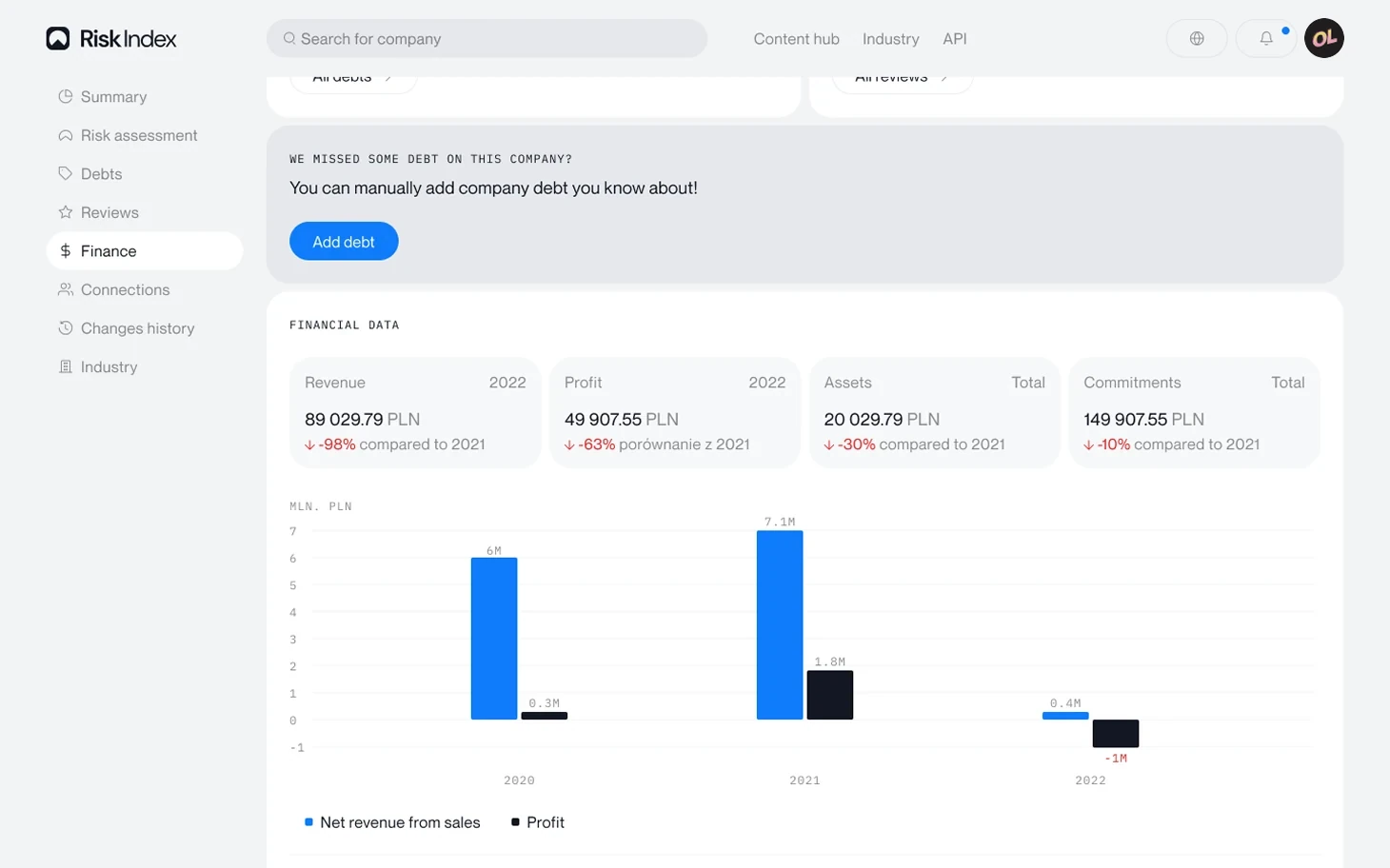
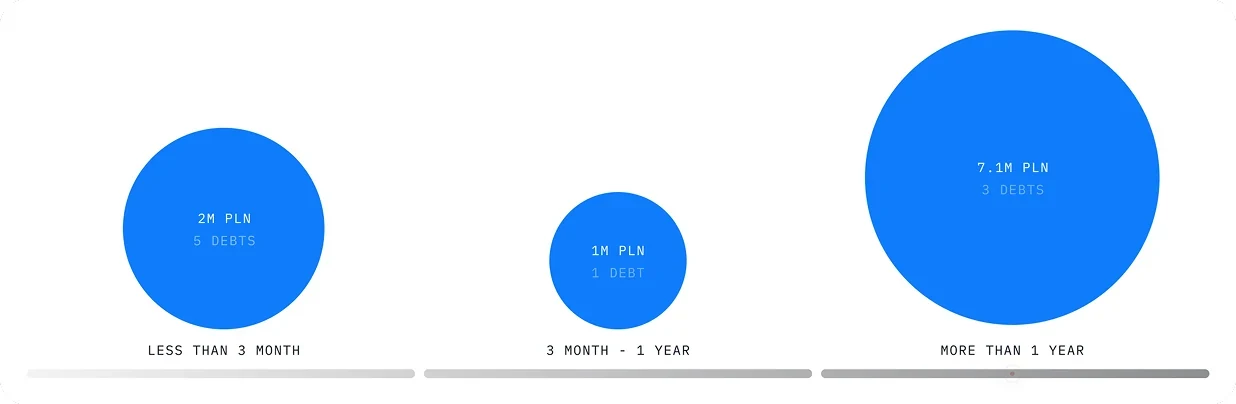
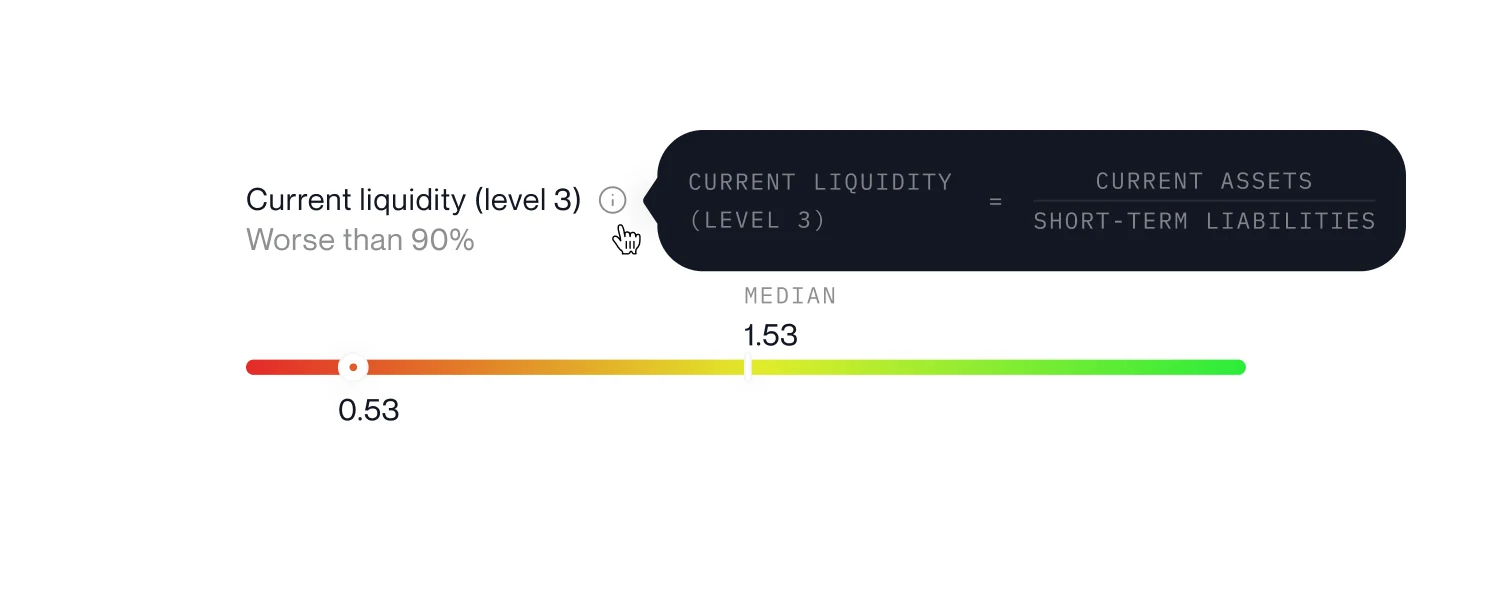
Other Land turned RiskIndex's debt and financial data into charts that are easy to read and compare. On the debts page, a step chart tracks how debt changes over time. Bubble charts show the size and age of debts at a glance.
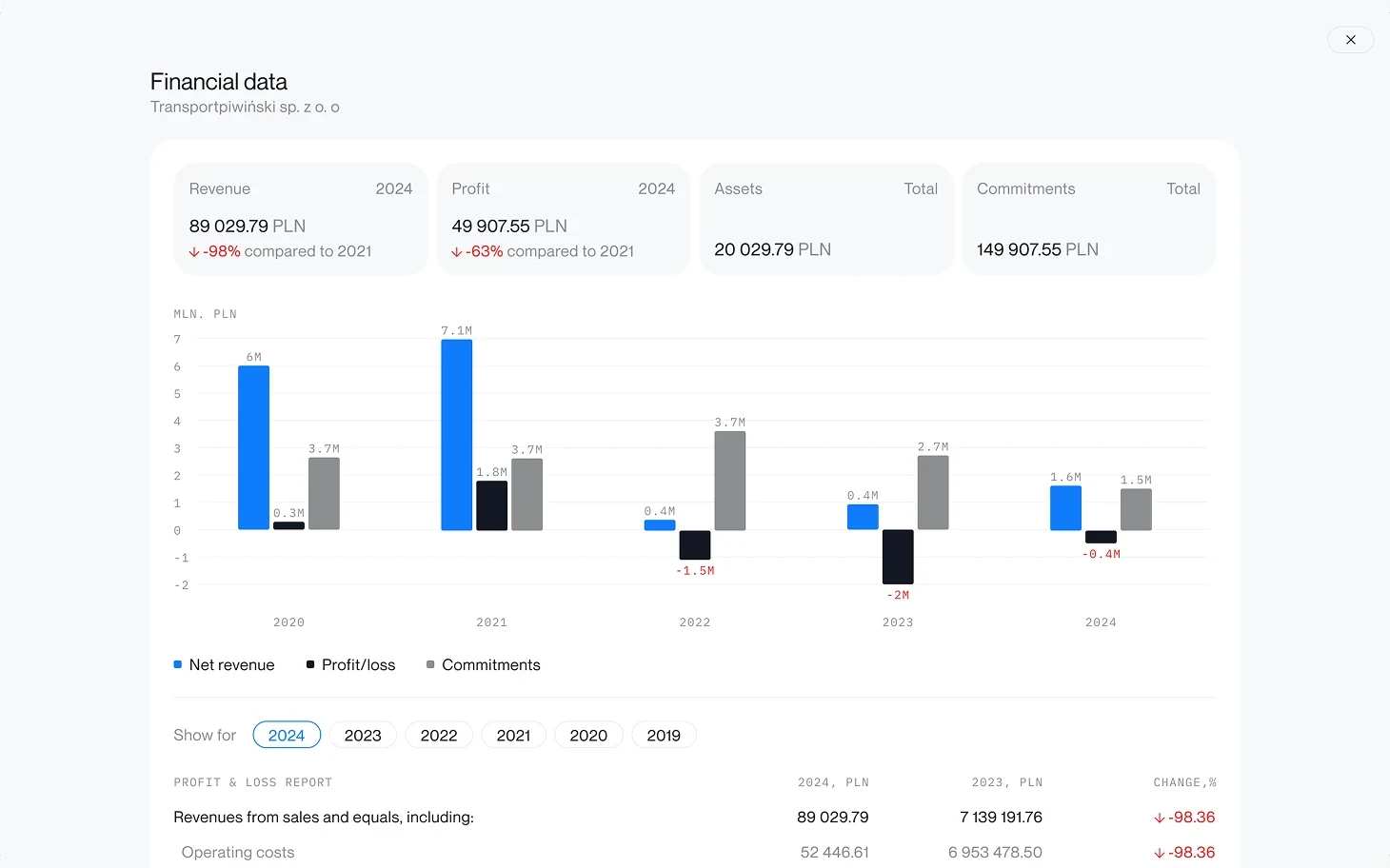
For financial indicators, a bar chart shows financial trends. A temperature scale shows how a company compares with its industry.
AI review analysis in RiskIndex
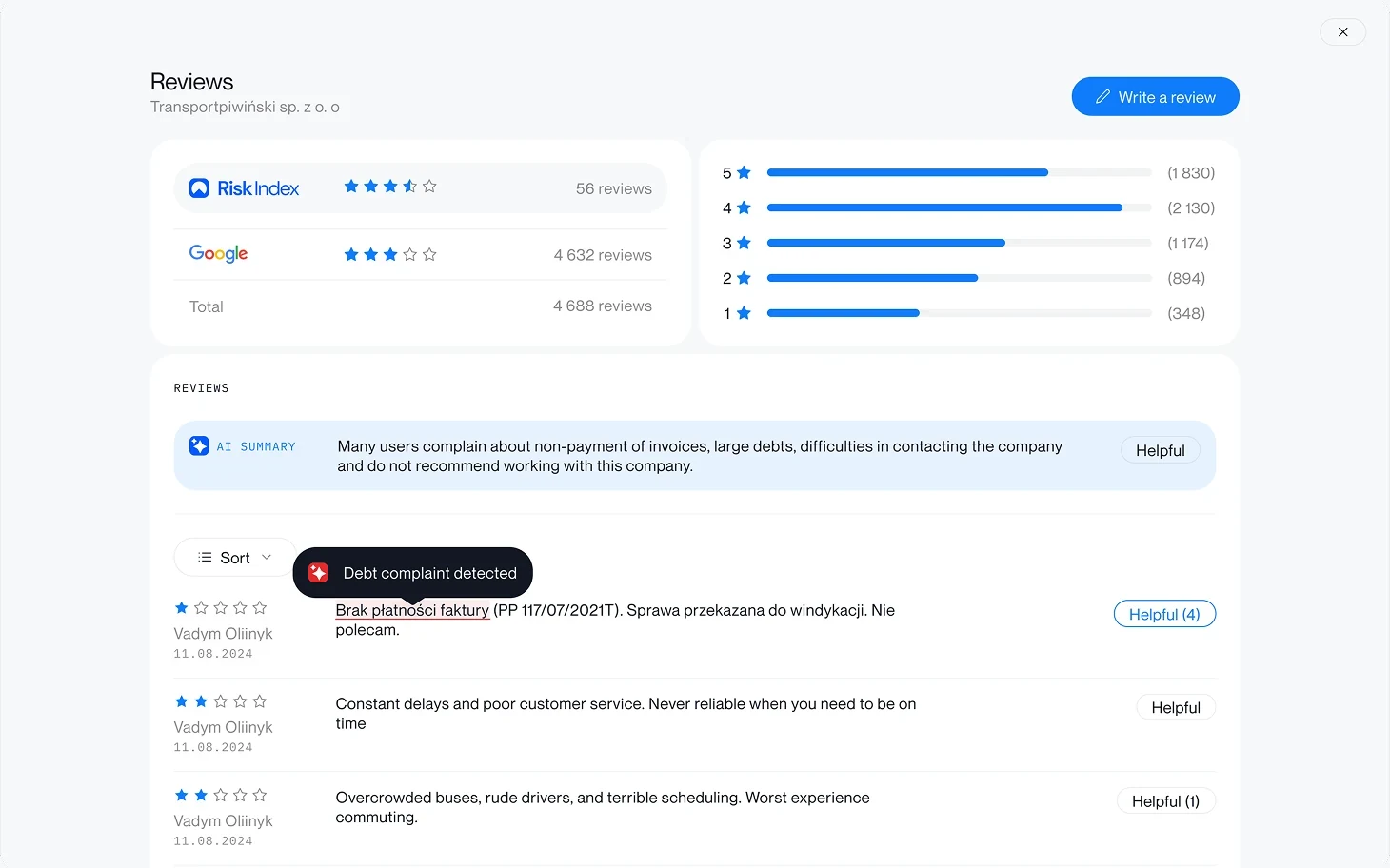
Other Land designed how RiskIndex's AI feature analyses company reviews, so users can quickly identify risks. The AI highlights negative keywords and summarises the key issues.
Company connections and changes history
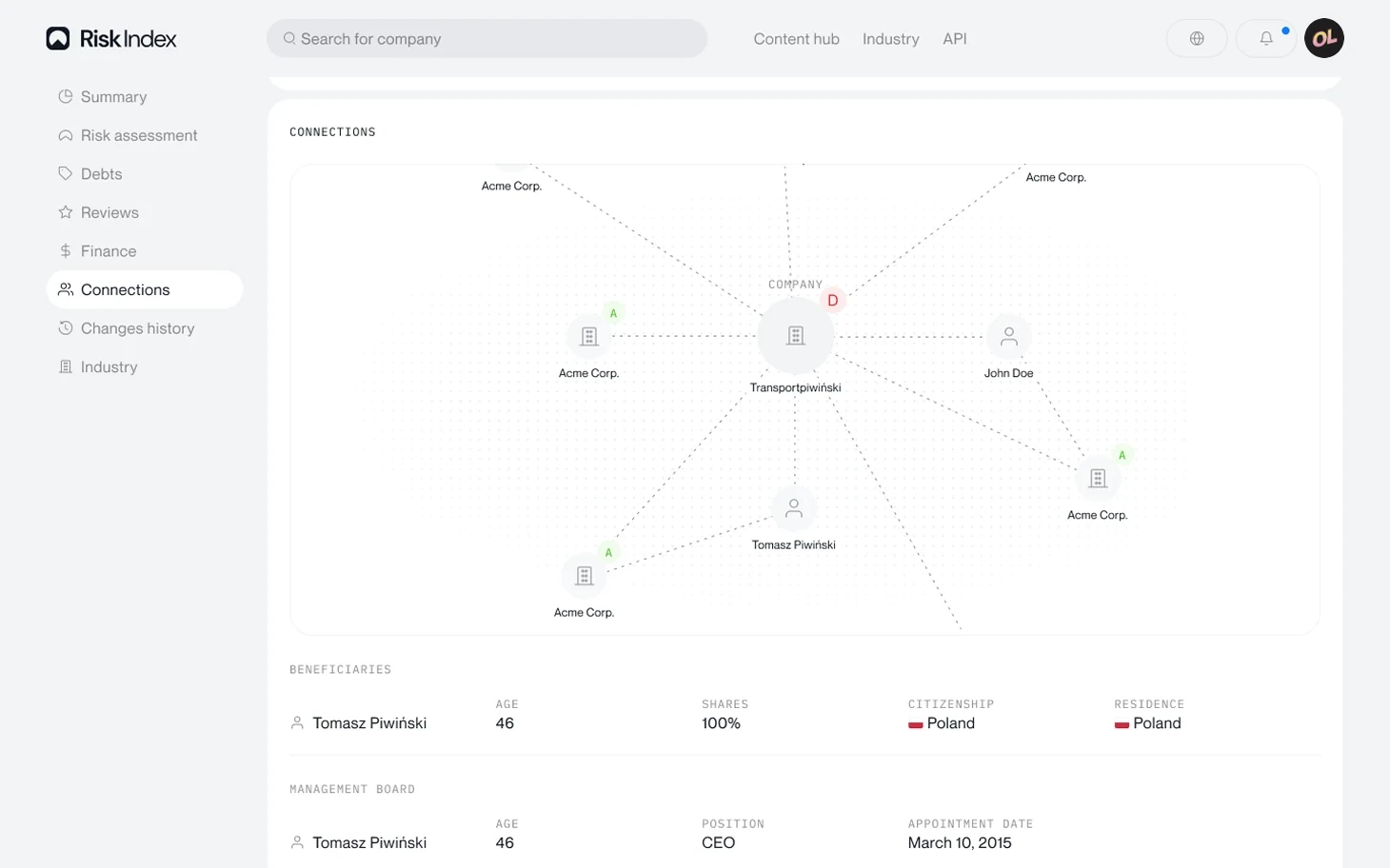
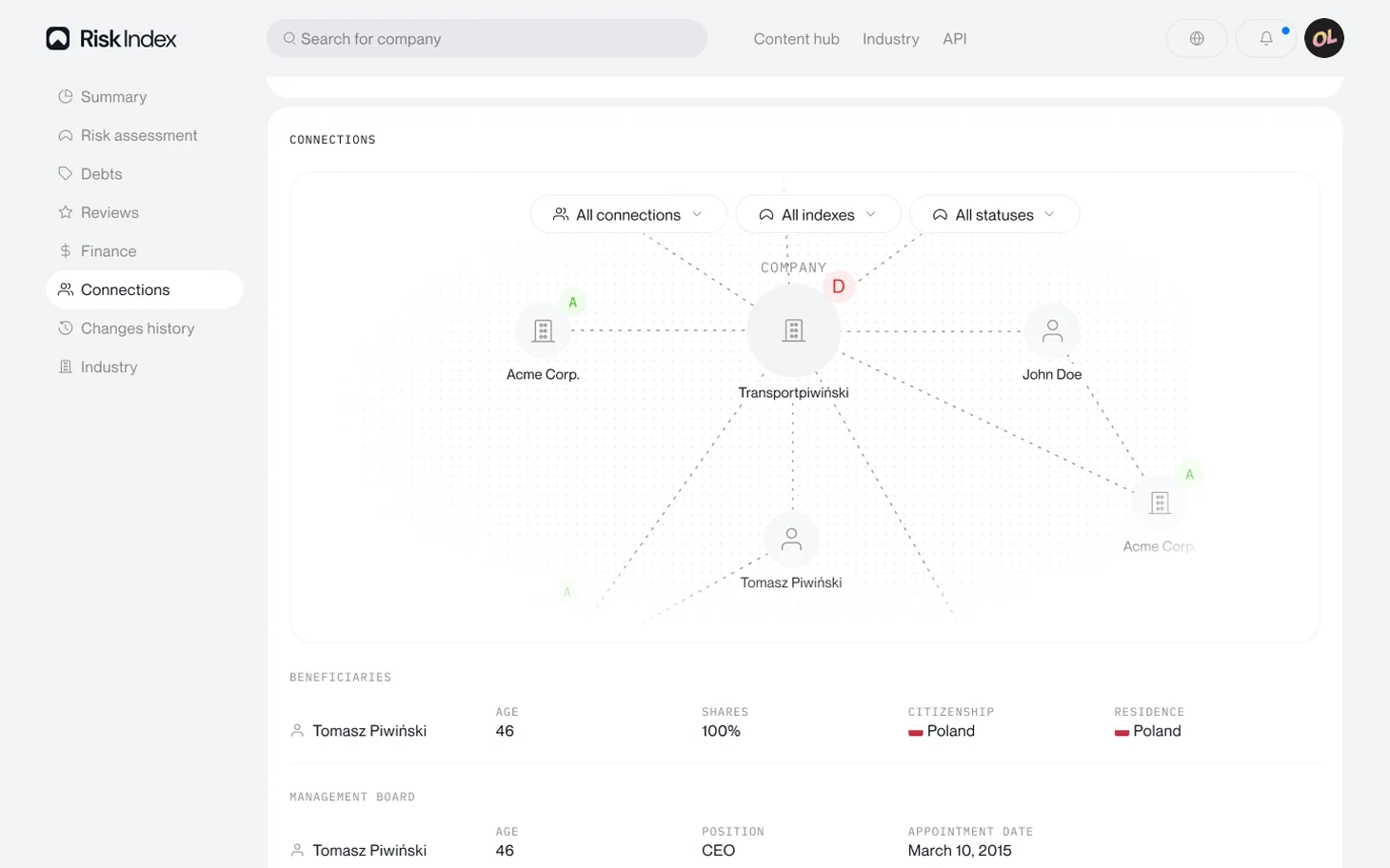
Other Land mapped the relationships between companies and individuals as a network diagram, so users can uncover hidden links. Filters narrow the map down for precise searches.
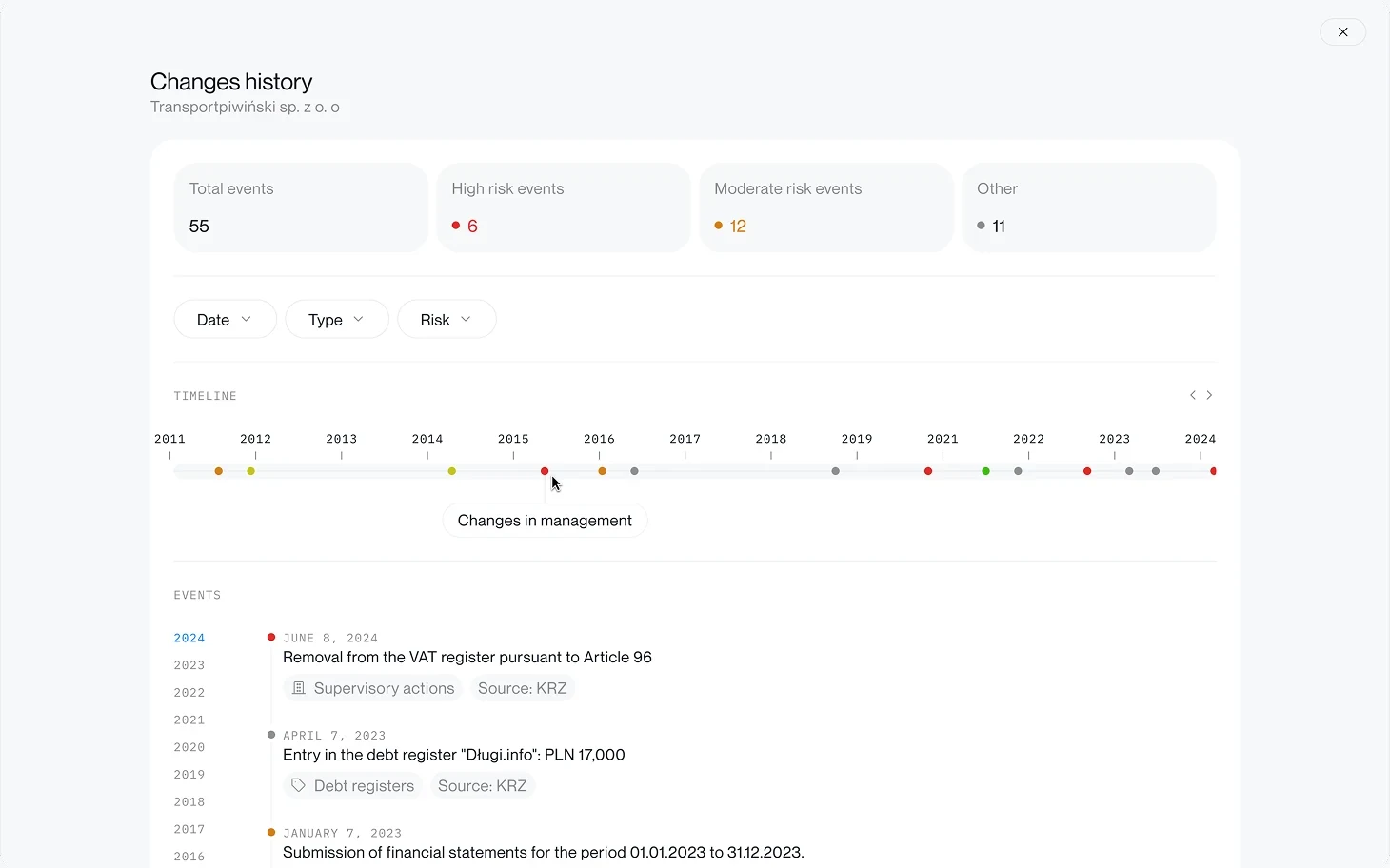
The changes history is a colour-coded timeline of key company changes and their impact. Users track risks, past decisions and structural shifts at a glance.
Company search with filters
Other Land redesigned search so users find relevant companies faster. Each result is a card with the key company details for quick scanning. Filters sit in a sidebar within easy reach.
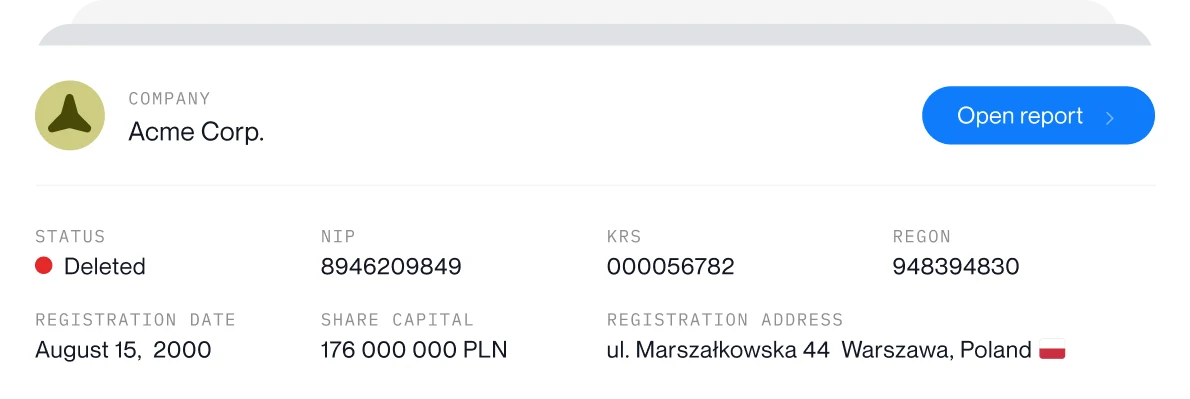
RiskIndex marketing website
Other Land designed a first RiskIndex website, quickly and in a deliberately basic version, so the product could launch. The budget was limited, and launching mattered more than polishing every detail.
The website presents the product, its value and its key features, explains the RiskIndex API and includes a blog.
RiskIndex design system and supporting screens
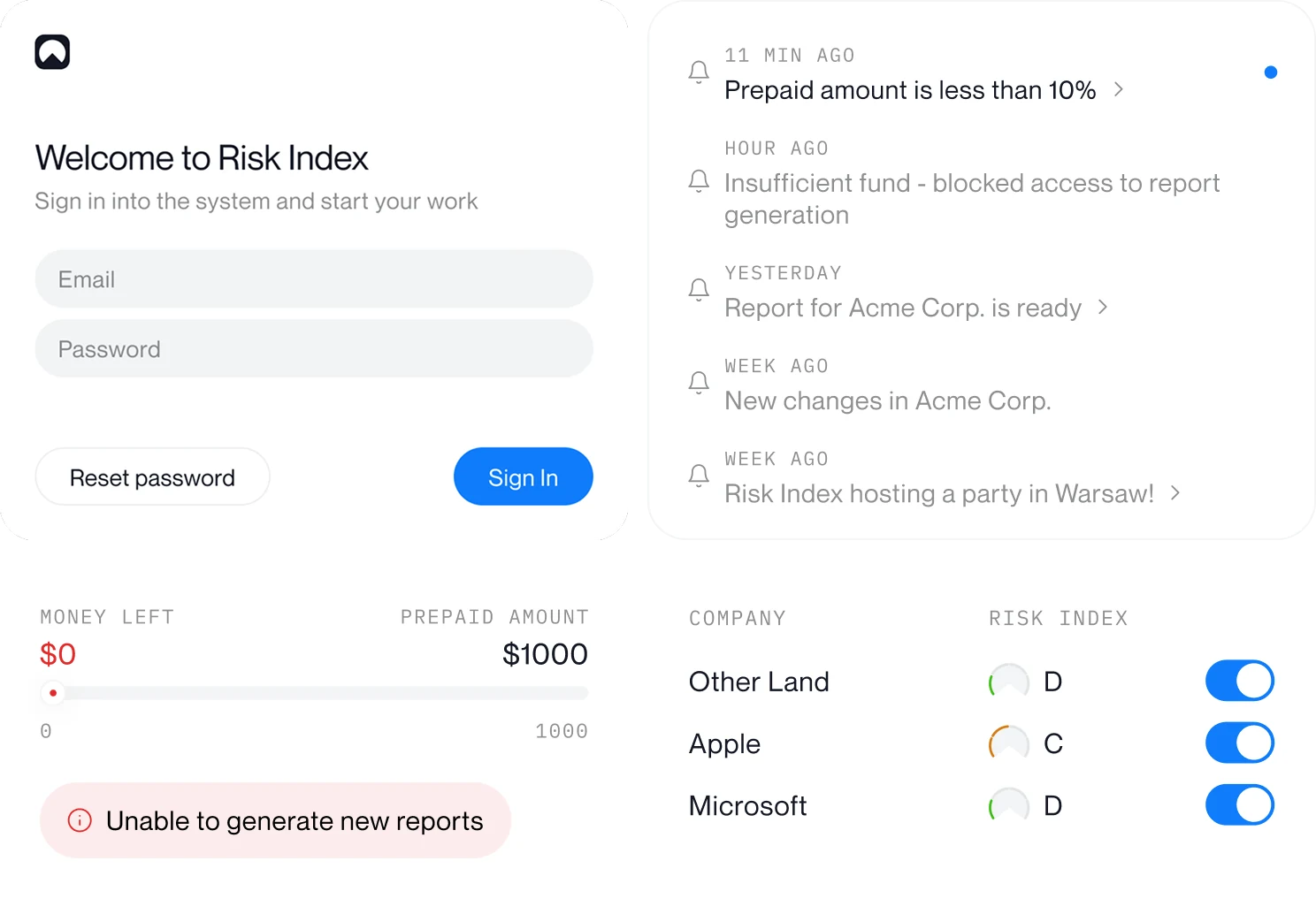
After the first screens, Other Land built a RiskIndex design system and scaled the product with it. Every screen, from sign-in and notifications to the account balance and the monitoring list, uses one set of components.
RiskIndex on mobile
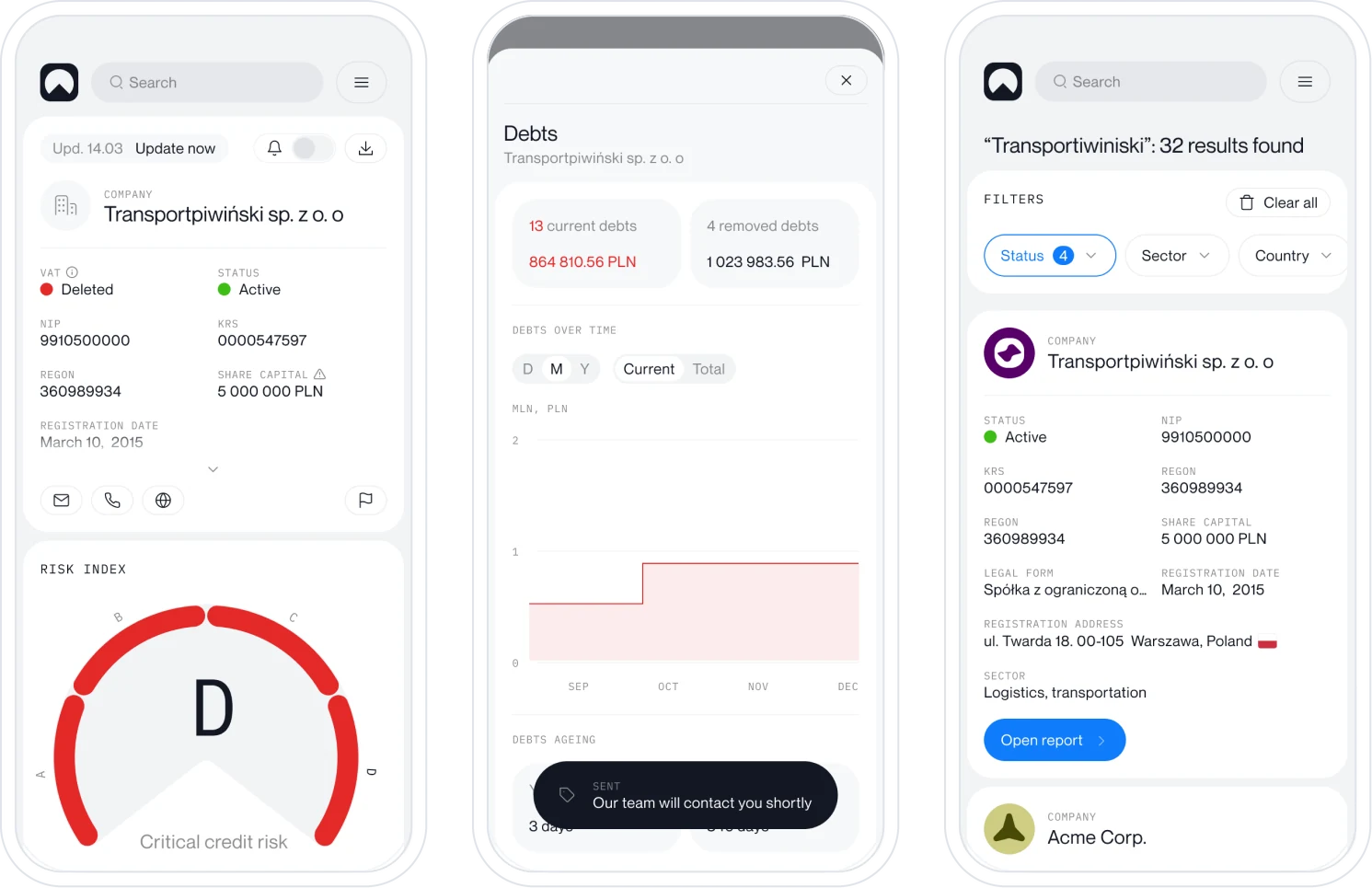
About 37% of RiskIndex users worked on mobile, so Other Land designed a mobile version of every screen and flow, including charts and complex tables.
Results for RiskIndex
With the free plan, RiskIndex's conversion to purchase rose by about 40%, measured in PostHog. Users try the product for free, see the value of the report, book a demo with sales and then subscribe.
Other Land also gave RiskIndex new branding and UI, clear data visualisations, a design system, a mobile version and a first website.
- Conversion to purchase up by about 40%, with more demo requests
- A freemium model to try before buying
- A mobile version for about 37% of users
- New branding, UI and a design system
Who from Other Land worked on RiskIndex
-

Vadym, Product Designer
Designed the RiskIndex platform, its mobile version and the website.
-

Liliya, Design Director
Fractional design consultant, advising on the new visual direction.
-

Veronika, Operational Director
Fractional product management, a second pair of eyes on the business outcomes.





Trusted by 56+ companies